What Is a Ceiling Mount Range Hood? What Really Matters
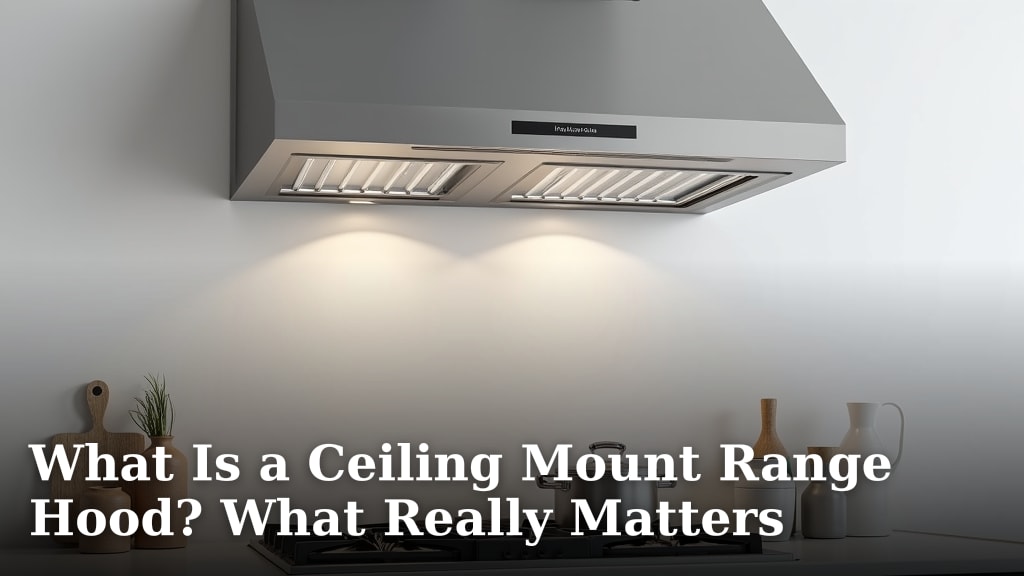
A ceiling mount range hood is a **ventilation system installed directly into your ceiling** above your cooking surface. Its main job is to A ceiling mount range hood is a ventilation system that removes smoke, grease, and odors from your kitchen.remove smoke, grease, and odors from your kitchen air. This type of hood is often chosen for its ability to blend into your kitchen design.
Unlike wall or under-cabinet models, a ceiling mount hood offers a cleaner, more open look in your kitchen. Many people select them because they don’t obstruct the view or kitchen cabinetry. We found that choosing the right CFM (cubic feet per minute) is key for effective air cleaning.
TL;DR:
- Ceiling mount range hoods vent air from your kitchen.
- They are installed in the ceiling above your stove.
- They help remove smoke, grease, and smells.
- They offer a sleek, unobtrusive kitchen look.
- Proper CFM is important for performance.
Ready to figure out if a ceiling mount range hood is the right choice for your kitchen? We’ve gathered the important details to help you decide.
Understanding Ceiling Mount Range Hoods
A ceiling mount range hood is a ventilation system. It installs directly into your kitchen ceiling. Its main purpose is to clear smoke, grease, and odors from your cooking area. This style is popular for its ability to blend in visually. Many people choose it for a cleaner, more open kitchen design.
How Ceiling Mount Hoods Work
These hoods are essentially powerful fans. They pull airborne cooking byproducts upwards. This air is then either vented outdoors through ductwork or filtered and recirculated back into the kitchen. The type of installation – vented or recirculating – depends on your kitchen setup and preferences. Venting outdoors is generally more effective at removing all impurities.
Key Components of a Ceiling Mount Hood
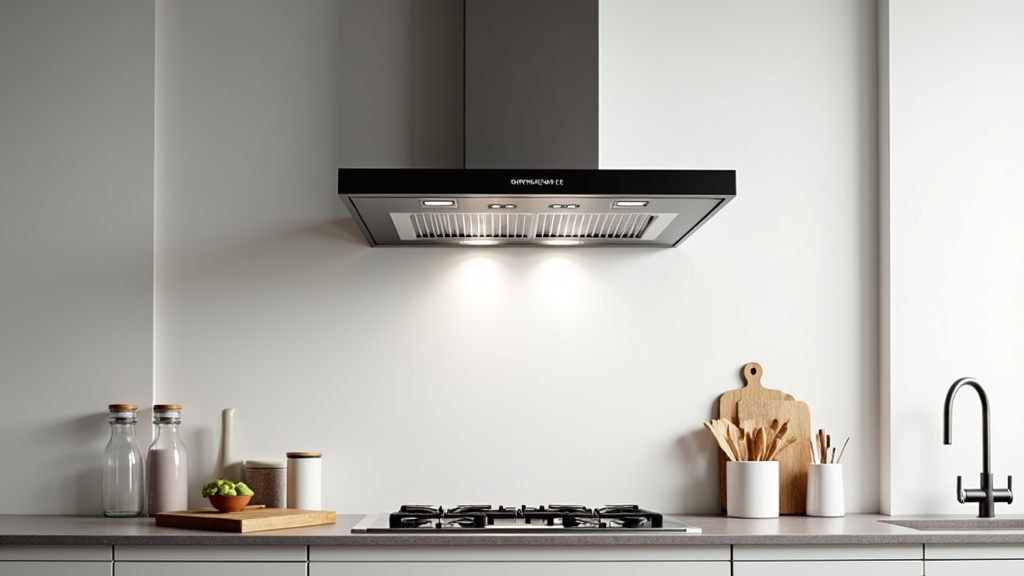
You’ll find a few main parts in a ceiling mount range hood. There’s the housing that sits in the ceiling. This contains the fan motor and filters. It also includes the control panel. Some models have integrated lighting. The exterior is often a sleek panel that matches your kitchen decor. The goal is to make it look like a subtle part of your ceiling, not a bulky appliance.
What Really Matters: Performance and Features
When you’re looking at ceiling mount range hoods, a few things are more important than others. You want a hood that actually does its job well. This means focusing on its ability to clean your air effectively. We found that performance and ease of use are top priorities for most shoppers.
The Power of Airflow: Understanding CFM
The most critical factor for any range hood is its CFM, or Cubic Feet per Minute. This measures how much air the hood can move. More CFM means more air cleaned. So, how much CFM do you need? Many experts suggest matching CFM to your cooktop’s power. A good rule of thumb is to have at least 100 CFM per 10,000 BTU of your cooktop’s maximum output (Home Ventilation Institute).
For electric or induction cooktops, it’s a bit simpler. You can aim for around 100-150 CFM for standard cooking. If you do a lot of high-heat cooking, like searing or stir-frying, you’ll want more. We found that hoods with 600 CFM or higher are suitable for powerful, professional-style ranges.
Filtration: Keeping Your Air Fresh
Range hoods use filters to trap grease and other particles. For vented hoods, these filters are often metal mesh. They are designed to catch grease before it enters the ductwork. These metal filters are usually dishwasher-safe. This makes cleaning them quite easy.
Recirculating hoods use a combination of grease filters and charcoal filters. The charcoal filters are key here. They absorb odors and smoke. These charcoal filters cannot be cleaned. You will need to replace them periodically. Many experts say this replacement is vital for the hood to work effectively (Kitchen Venting Guide).
Noise Level: A Quieter Kitchen Experience
No one wants a kitchen appliance that sounds like a jet engine. Range hoods can be noisy. The noise level is measured in sones. Lower sone ratings mean quieter operation. We found that hoods rated at 1 to 4 sones are generally considered quiet for everyday use. Some high-end models can go even lower.
Look for hoods that mention quiet operation or have specific noise ratings. Fan speed settings also play a role. You might only need the highest setting for short bursts when cooking intensely. A good hood will offer multiple speed options.
Lighting: Illuminating Your Cooking Space
Good lighting is essential for safe and enjoyable cooking. Many ceiling mount range hoods come with built-in LED lights. LEDs are energy-efficient and provide bright, clear illumination. Some models offer adjustable brightness or different color temperatures. This allows you to set the mood in your kitchen.
Consider the placement and coverage of the lights. You want them to illuminate your entire cooktop area. We found that dual lighting zones, one for general illumination and one focused on the cooking surface, can be very helpful.
Controls: Easy to Use and Access
How you control your range hood matters. Ceiling mount hoods often have controls integrated into the unit. These can be physical buttons or touch controls. Some higher-end models even offer remote controls or smart home connectivity.
Think about where the controls will be located. Will they be easy to reach when you’re cooking? Some hoods have controls on the bottom panel, while others might be on the side. We found that simple, intuitive controls make a big difference in daily use.
Installation and Maintenance Considerations
Installing a ceiling mount range hood can be more involved than other types. It often requires working with ductwork and electrical connections in your ceiling. This is why many people hire professionals for installation.
Venting vs. Ductless: Which Is Right for You?
Vented hoods connect to ductwork that leads outside your home. This is the most effective way to remove cooking fumes and grease. However, it requires having an accessible exterior wall or roof for venting. Installing ductwork can sometimes be a major renovation project.
Ductless (recirculating) hoods use filters to clean the air. They then release the air back into your kitchen. These are easier to install because they don’t require external ducting. However, they are less effective at removing all pollutants and odors. The charcoal filters also need regular replacement, adding an ongoing cost.
Maintenance Checklist for Your Hood
Keeping your range hood in good working order is simple if you follow a routine. Here’s a quick guide:
- Clean Metal Filters: Wash them regularly, either by hand or in the dishwasher, to remove grease buildup.
- Replace Charcoal Filters: If you have a ductless hood, replace these every 3-6 months, or as recommended by the manufacturer.
- Wipe Down the Exterior: Use a damp cloth to keep the visible parts of the hood clean and looking good.
- Check Light Bulbs: Replace any burnt-out LED bulbs as needed.
- Inspect Fan Blades: Occasionally, ensure the fan blades are free of excess grease or debris that could affect performance.
Professional Installation Recommendations
Because ceiling mount hoods often involve more complex installation, we strongly recommend professional help. An experienced installer will ensure the hood is securely mounted. They will also make sure the electrical connections are safe and up to code. Proper installation is key to the hood’s performance and your kitchen’s safety.
Conclusion
Choosing a ceiling mount range hood means prioritizing a clean aesthetic and effective ventilation. You’ve learned that CFM is king for removing cooking fumes. Look for filters that match your venting setup, whether ducted or ductless. Don’t forget to consider noise levels, lighting, and ease of use.
Your next step is to measure your space and your cooktop’s power. Then, compare models based on their CFM ratings and the features you need. Proper installation by a professional will ensure your hood performs its best for years to come. Enjoy your fresher, cleaner kitchen!
Frequently Asked Questions
Can a ceiling mount range hood actually clear smoke and odors effectively?
Yes, when properly sized and installed, a ceiling mount range hood can be very effective. The key is choosing a model with adequate CFM for your cooking style and cooktop output. Venting outdoors is generally more powerful than recirculating.
How do I know what CFM I need for my ceiling mount range hood?
A good starting point is 100 CFM for every 10,000 BTUs of your cooktop’s maximum output. For electric or induction cooktops, aim for 100-150 CFM, or more if you frequently do high-heat cooking.
What’s the difference between a vented and ductless ceiling mount range hood?
Vented hoods push air outside your home through ductwork, removing all pollutants. Ductless hoods use filters to clean the air and recirculate it back into your kitchen, which is less effective for heavy smoke and odors.
How often do I need to clean or replace filters on my ceiling mount hood?
Metal grease filters on vented hoods should be cleaned regularly, often monthly or as needed, and can usually go in the dishwasher. For ductless hoods, charcoal filters typically need replacement every 3-6 months to maintain odor-filtering efficiency.
Are ceiling mount range hoods difficult to install?
Installation can be more complex than other hood types because it often involves working within your ceiling. For safety and optimal performance, we recommend professional installation for most ceiling mount range hoods.