Do You Need a Range Hood? The Short Answer
Yes, you do need a range hood. We found that a range hood is a key appliance for safely removing smoke, steam, and cooking odors from your kitchen. It helps protect your air quality and prevents long-term grease buildup on your walls and cabinets.
The primary job of a range hood is to improve your kitchen’s air quality by venting airborne grease and moisture outside. Many experts say this helps prevent sticky films and potential fire hazards from accumulating over time. Think of it as your kitchen’s primary ventilation system.
- The short answer is yes, a range hood is essential for most kitchens.
- It removes smoke, steam, and cooking smells before they spread through your home.
- A hood prevents grease buildup on surfaces, which is both a cleaning hassle and a safety risk.
- It significantly improves overall indoor air quality, making your home more comfortable.
- For electric cooktops, a recirculating hood is an option; for gas, a vented hood is strongly recommended.
Below, we break down everything you need to know about choosing and using a range hood. Let’s walk through exactly how this works so you can make a confident choice for your home.
Why Your Kitchen Needs Proper Ventilation
Let’s move beyond the short answer and look at the “why.” When you cook, especially with high heat, you create more than just a meal. You generate airborne particles that linger. A range hood is your kitchen’s dedicated exhaust system for this invisible cloud.
Think about frying bacon or sautéing onions. That visible steam and smoke aren’t just going away on their own. They carry tiny droplets of grease and water vapor into your air. Without a hood, these particles settle on every surface—your cabinets, walls, and even your lungs.
The Impact on Your Air Quality
The air inside your home can be two to five times more polluted than outdoor air, according to the U.S. Environmental Protection Agency. Cooking is a major indoor source of this pollution. It releases nitrogen dioxide, carbon monoxide, and particulate matter, especially from gas stoves.
We found that a properly installed and used range hood acts like a powerful filter for this specific pollution. It captures the contaminants at the source and vents them outside. This keeps the air you and your family breathe cleaner day after day.
Protecting Your Respiratory Health
Breathing in cooking fumes isn’t just unpleasant. Long-term exposure to fine particulate matter from cooking can be linked to respiratory and cardiovascular issues (National Institutes of Health). This is particularly important for people with asthma, allergies, or other sensitivities. A hood helps create a healthier breathing environment.
The Grease Problem: More Than Just Sticky Cabinets
Grease particles are sneaky. They float in the air and land everywhere. Over time, this creates a sticky, yellowish film that’s difficult to clean. You’ve probably noticed it on your range, cabinet handles, or even nearby light fixtures.
This isn’t just a cleaning hassle. A heavy buildup of grease is a recognized fire hazard. A stray spark or a pan flare-up can ignite grease deposits. Many fire departments cite uncleaned cooking areas as a common cause of house fires. A range hood traps most of this grease before it can settle.
Types of Range Hoods: Ducted vs. Recirculating
Not all range hoods are the same. The two main types work in fundamentally different ways. Understanding this difference is key to choosing the right one for your kitchen and your cooking habits.
Vented (Ducted) Hoods: The Gold Standard
A vented hood, or ducted hood, is the most effective option. It has a fan that pulls contaminated air from the cooktop. This air is then ducted through your wall or ceiling to the outside of your home.
The primary benefit is true removal. Smoke, steam, odors, and pollutants are completely extracted from your living space. For gas cooktops, this is strongly recommended. Gas burners produce combustion byproducts like nitrogen dioxide that you absolutely want vented outdoors (Mayo Clinic).
Recirculating (Ductless) Hoods
A recirculating hood also has a fan, but it doesn’t have outside ducting. Instead, it pulls air through a charcoal filter to trap odors and some grease. The filtered air is then recirculated back into the kitchen.
Their job is air cleaning, not air removal. They are less effective at clearing heat, steam, and fine particles. They work best for light cooking, like boiling water or making toast. Charcoal filters must be replaced regularly to remain effective.
| Feature | Vented (Ducted) Hood | Recirculating (Ductless) Hood |
|---|---|---|
| How it Works | Exhausts air outside the home via ducts | Filters and recirculates air back into the kitchen |
| Best For | Heavy cooking, gas ranges, high-BTU burners | Light cooking, electric cooktops, apartments where venting isn’t possible |
| Effectiveness | High – removes pollutants, heat, and moisture | Moderate – mainly reduces odors and some grease |
| Maintenance | Cleaning metal grease filters; checking ductwork | Regularly replacing charcoal filters |
Choosing the Right Hood for Your Space
So you’re convinced you need one. Now, how do you pick the right model? Size and power are the two most important factors to get right. Getting them wrong means your hood won’t do its job effectively.
Size: Match Your Cooktop
Your hood should be as wide as your cooktop. This is the simplest rule. For a standard 30-inch range, you need a 30-inch hood. For a professional-style 36-inch range, choose a 36-inch or wider hood. This ensures the entire cooking surface is covered.
Power: CFM and Sones
How do you measure a hood’s muscle? Two key ratings matter.
- CFM (Cubic Feet per Minute): This measures airflow. Higher CFM means more air is moved. A general guideline is 100 CFM for every inch of cooktop width. For a 30-inch range, look for at least 300 CFM.
- Sones: This measures sound. It’s like a decibel rating. 1.0 sone is very quiet, like a quiet refrigerator. 4.0 sones is noticeable, like a TV at normal volume. A balance between power and noise is key.
Installation Height Matters
Where you mount the hood affects its performance. Manufacturers provide specific height recommendations, but common guidelines are:
- For gas ranges: 24 to 30 inches above the cooktop.
- For electric or induction ranges: 20 to 24 inches above the cooktop.
Installing it too high reduces its capture efficiency. Installing it too low can be a fire hazard and make cooking cramped.
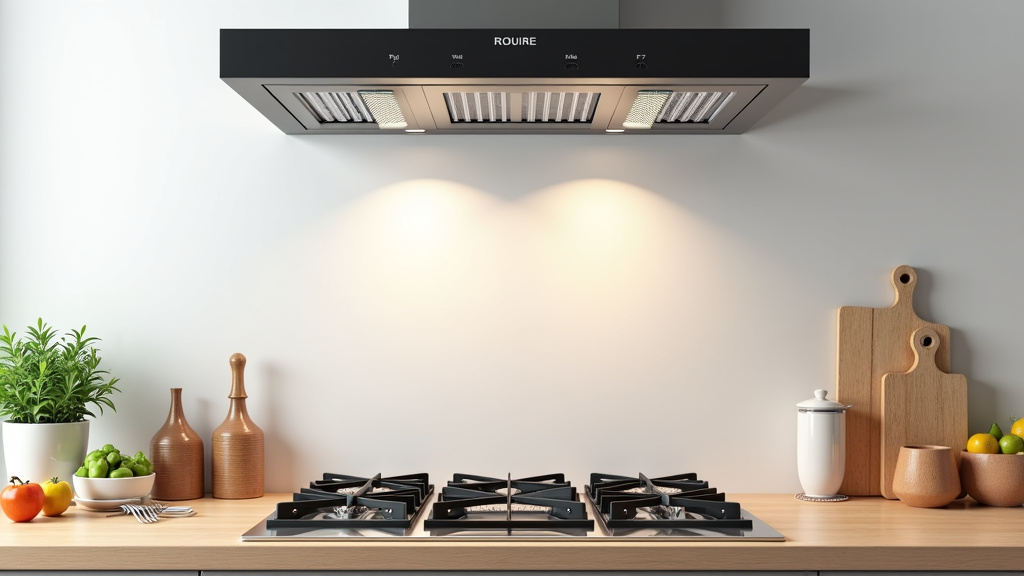
Installation and Maintenance: Keeping it Working
A great hood installed poorly won’t work well. And even the best hood needs regular care. These steps ensure you get the full benefit and safety from your investment.
Professional Installation is Key
Unless you are a skilled DIYer, we recommend professional installation. This is especially true for vented hoods, which require cutting through an exterior wall and installing ductwork. Proper sealing prevents outdoor air or pests from entering your home.
Regular Maintenance Checklist
Think of maintenance as cheap insurance for performance and safety. Here’s what to do:
- Clean Metal Grease Filters: Do this every 1-3 months. Most are dishwasher-safe. Soak them in hot, soapy water if needed.
- Check and Clean the Hood Interior: Wipe down the inside fan housing and ductwork annually with a degreaser.
- Replace Charcoal Filters (Recirculating Hoods): Change these every 6-12 months, or as the manufacturer recommends.
- Inspect the Ductwork (Vented Hoods): Ensure the outside vent flap opens freely and isn’t blocked by debris.
- Wipe the Exterior: Keep it clean with a mild cleaner to prevent grease buildup on the surface.
Common Concerns and Questions
People often hesitate to use their hood or wonder if it’s really necessary for their style of cooking. Let’s address some frequent worries.
“Will a Hood Make My Kitchen Too Cold?”
It can feel that way in winter. A powerful hood pulls conditioned air out of your home. The solution isn’t to avoid using it, but to crack open a window in another room when you run the hood on high. This allows makeup air to enter without overworking your HVAC system.
“I Have an Electric Stove. Do I Still Need One?”
Yes. While an electric stove doesn’t produce combustion gases, it still generates smoke, steam, odors, and grease particles from your food. A hood, even a recirculating one, manages these nuisances. It keeps your kitchen more comfortable and cleaner.
“My Hood Isn’t Strong Enough. What Now?”
If you find your hood is always struggling, consider a few things. First, ensure the filters are clean. Second, check that the duct path is as short and straight as possible—long, twisted ducts reduce power. If you frequently sear steaks or use high-BTU burners, you may need to upgrade to a higher CFM model.
Your range hood works in the background, but its impact is front and center in your kitchen’s air quality, cleanliness, and safety. By choosing the right one and maintaining it, you’re making a smart, long-term investment in your home and your health. It’s not just an appliance; it’s a fundamental part of a well-functioning kitchen.
Conclusion
Choosing a range hood is less about luxury and more about **maintaining a safe, clean, and healthy kitchen**. We’ve found that the right hood protects your air quality, prevents hazardous grease buildup, and makes your home more comfortable. Whether you choose a vented model for maximum power or a recirculating one for lighter cooking, the key is selecting the correct size and maintaining it properly. Your next step is to **measure your cooktop width and determine your ventilation needs**. This simple action ensures you invest in the right solution to keep your kitchen air clear for years to come.
Frequently Asked Questions
Is a range hood really necessary if I only cook occasionally?
Even occasional cooking generates smoke, steam, and odors that can linger in your home. A range hood, even used on a low setting, helps clear these nuisances quickly. It also prevents gradual grease accumulation on surfaces, which is a key long-term benefit.
Can I install a range hood myself to save money?
Some simple, ductless models are designed for DIY installation. However, for any vented hood, we strongly recommend professional help. Proper sealing and ductwork are critical for performance and safety, preventing issues like air leaks or reduced efficiency.
My apartment doesn’t allow venting outside. What’s my best option?
For apartments or condos where external ducting isn’t possible, a **recirculating (ductless) range hood** is your primary solution. Choose a model with the highest CFM you can find and replace its charcoal filters regularly to maintain effectiveness.
How much should I expect to spend on a good range hood?
Prices vary widely based on style, power, and brand. Basic recirculating models can start under $200, while high-performance vented hoods can run from $500 to over $1,500. **We found that balancing power (CFM) with your budget is the most practical approach** for most households.
Do range hoods help with cooking smells going into other rooms?
Yes, that’s one of their core jobs. A properly installed and used hood **captures cooking odors at the source** before they can spread throughout your home. This is especially true for vented models, which remove the smells completely.