How Does a Ductless Range Hood Work? The Common Answer
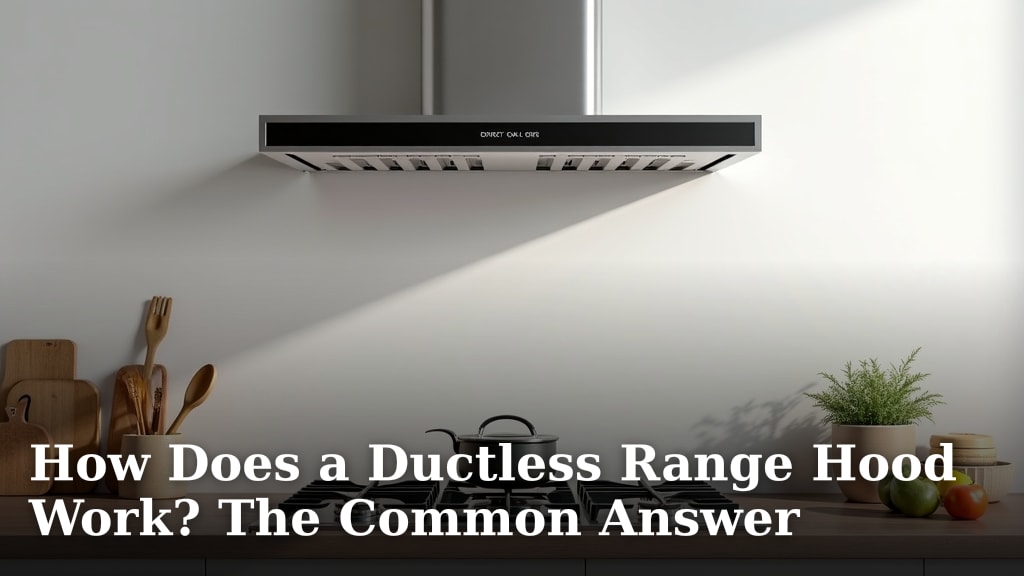
A ductless range hood works by filtering and recirculating your kitchen air, instead of venting it outside. It uses a fan to draw smoke and grease through charcoal filters, then releases cleaner air back into the room. This makes them a great option when installing a traditional vented hood isn’t possible.
Unlike vented hoods that require ductwork, ductless models are designed for simplicity and flexibility. They can be installed in almost any kitchen. You’ll need to replace the filters regularly to keep them working effectively, so remember to factor that in. Many people find them a practical choice for condos or apartments.
- Ductless hoods filter and recirculate air.
- They don’t need outside ductwork.
- Charcoal filters trap grease and odors.
- Filters need regular replacement.
- Ideal for smaller spaces or apartments.
Let’s walk through exactly how a ductless range hood does its magic, step by step.
Understanding Ductless Range Hood Functionality
So, how exactly does a ductless range hood clean your kitchen air? It’s actually quite clever. Instead of pushing smoke and grease outside, it filters them right there in your kitchen. This means no complex ductwork is needed. You simply install the hood, plug it in, and it starts working its magic.
The Core Components: Fan and Filters
At its heart, a ductless range hood has two main jobs. It needs to pull the air in, and it needs to clean that air. A built-in fan does the heavy lifting of drawing in cooking fumes. Once the air is captured, it passes through a series of filters designed to trap impurities.
The Role of the Fan
Think of the fan like your kitchen’s little vacuum cleaner. When you turn the hood on, the fan spins, creating suction. This suction pulls airborne grease, steam, and cooking odors away from your stovetop. The stronger the fan, the more air it can move. This is measured in Cubic Feet per Minute (CFM).
The Essential Filter System
This is where the real cleaning happens. Ductless hoods rely on a multi-stage filtering process. The first line of defense usually tackles the grease. The second stage deals with odors. Getting these filters right is key to their effectiveness.
Stage 1: Capturing Grease Particles
Every time you cook, especially with frying or searing, tiny grease particles become airborne. If left unchecked, these can stick to your cabinets and walls. They can also build up in your hood’s motor, reducing its efficiency. Ductless hoods use a special filter to grab this grease.
Mesh Filters
Most ductless range hoods start with a washable mesh filter. This is often made of aluminum or stainless steel. It’s designed with many small holes. These holes act like a sieve, catching the larger grease particles as the air passes through. You can usually remove these filters and wash them in your sink or dishwasher.
Baffle Filters (Less Common in Ductless)
While more common in vented hoods, some higher-end ductless models might use baffle filters. These have a more complex design with angled metal plates. They force the air to change direction, causing grease to deposit on the plates. They are very effective at grease capture.
Stage 2: Eliminating Odors with Charcoal
Grease is one thing, but those lingering cooking smells are another. This is where the second, critical filter comes into play. Without this step, your kitchen would just recirculate smoky, smelly air. This filter is typically made of activated charcoal.
Activated Charcoal Filters
Activated charcoal is specially treated to be extremely porous. Imagine it as a super-sponge for odors. As the cooking air passes through the charcoal granules, odor molecules get trapped within the pores. This is a chemical absorption process. It effectively neutralizes smells, leaving your air fresher.
These charcoal filters are the workhorses for odor removal. They are usually not washable. Over time, their pores become saturated with odor molecules. When this happens, they can no longer absorb effectively. You’ll notice cooking smells lingering longer, which tells you it’s time for a change.
Many experts recommend replacing charcoal filters every 3 to 6 months, depending on your cooking habits. Heavy, frequent cooking will require more frequent replacements. This is a key maintenance task to keep your ductless hood working well (Cleveland Clinic).
The Recirculation Process
After the air has been scrubbed by the grease and charcoal filters, it’s ready to go back into your kitchen. The fan pushes the cleaner air back out through vents on the top or front of the hood. It’s a continuous loop of capture, filter, and release.
What Happens to the Filtered Impurities?
The grease is caught on the mesh or baffle filters. The odors are absorbed by the charcoal. These captured particles and molecules remain trapped within the filters. They don’t go anywhere. This is why you must clean the mesh filters and replace the charcoal filters. They can’t keep trapping things forever.
Why Recirculation Works (and Its Limits)
Recirculating air is effective at removing grease and odors. It makes your kitchen environment more pleasant. However, it’s important to understand what it *doesn’t* do. Unlike vented hoods, ductless systems don’t remove heat or humidity from the air. This is a key difference.
Humidity and Heat Management
When you boil water or cook steamy dishes, a lot of moisture is released. Vented hoods pull this moist air outside. Ductless hoods simply filter and return it. If you do a lot of high-heat, high-moisture cooking, you might notice your kitchen feeling a bit more humid. This is a common observation.
For general cooking, like sautéing or frying, the humidity increase is usually not a major issue. But for those who steam large batches of vegetables or boil pasta often, it’s something to consider. Managing kitchen humidity is important for preventing mold and mildew growth over time (CDC).
Maintenance: Keeping Your Hood Effective
The effectiveness of your ductless range hood depends entirely on proper maintenance. This isn’t a set-it-and-forget-it appliance. Regular cleaning and filter replacement are non-negotiable. Think of it like changing the oil in your car. You have to do it for the machine to run smoothly.
Cleaning the Grease Filters
You should clean your washable grease filters regularly. Many people find doing this once a month is sufficient. If you cook a lot of greasy foods, you might need to clean them more often. Remove them, wash them with warm, soapy water, rinse thoroughly, and let them dry completely before reinserting.
Replacing the Charcoal Filters
As we mentioned, charcoal filters have a limited lifespan. They can’t be cleaned to restore their effectiveness. You need to purchase replacement filters specifically designed for your hood model. The manufacturer’s manual will tell you how often to replace them. Most people find they need new ones every 3-6 months.
Here’s a quick checklist to keep your ductless hood running smoothly:
- Clean grease filters monthly (or more often if needed).
- Replace charcoal filters every 3-6 months (check manual).
- Wipe down the exterior of the hood regularly.
- Check for any visible damage or blockages.
- Keep the area around the hood clean.
A Comparison: Ductless vs. Vented Hoods
It’s helpful to see how ductless hoods stack up against their vented counterparts. This can help you understand why someone might choose one over the other. Installation and cost are usually the biggest deciding factors. It’s helpful to see how ductless hoods stack up against their vented counterparts, and whether a range hood is necessary for your kitchen.
| Feature | Ductless Range Hood | Vented Range Hood |
|---|---|---|
| Installation | Easy, no ductwork needed, plugs in | Complex, requires cutting through walls/ceilings for ducts |
| Air Handling | Filters and recirculates air back into kitchen | Vents smoke, grease, and odors directly outside |
| Cost (Initial) | Generally lower initial purchase price | Higher initial purchase price, plus potential installation labor |
| Ongoing Costs | Regular filter replacements (charcoal) | Minimal ongoing costs, no filters to replace |
| Effectiveness | Good for grease and odor removal; doesn’t remove heat/humidity | Excellent for removing heat, humidity, grease, and odors |
| Best For | Apartments, condos, kitchens where venting isn’t possible | Homes where external venting is feasible, for serious cooks |
As you can see, ductless hoods offer a great solution when venting isn’t an option. They provide essential air cleaning for a more comfortable cooking space. Just remember that regular filter maintenance is your key to success.
Conclusion
You now understand how ductless range hoods work. They effectively filter grease and odors using a fan and specialized filters. This process recirculates cleaner air back into your kitchen, offering a great solution when venting outside isn’t an option. While they don’t remove heat or humidity like vented hoods, their simplicity and flexibility make them ideal for many homes, especially apartments or condos. To ensure your ductless hood performs its best, remember that consistent maintenance—cleaning grease filters and replacing charcoal filters—is key. Take a moment to check your hood’s manual for its specific filter replacement schedule and add it to your home maintenance routine.
Frequently Asked Questions
How often do I need to replace the charcoal filters?
You typically need to replace charcoal filters every 3 to 6 months. This timeframe can change based on how often you cook and what you cook. Heavily using your hood for greasy or odor-producing meals will shorten their lifespan. Always check your hood’s manual for the manufacturer’s recommendation.
Can I wash the charcoal filters like the grease filters?
No, you cannot wash charcoal filters. They work by absorbing odors into their porous structure. Once the pores are full, they can no longer capture smells effectively. You will need to purchase and install new charcoal filters to maintain odor removal performance.
Will a ductless hood remove all cooking smells?
Ductless hoods are very good at removing common cooking odors thanks to their activated charcoal filters. However, they may not eliminate every single smell, especially from very strong or prolonged cooking sessions. Their effectiveness also depends on regular filter replacement.
What’s the main difference between a ductless and a vented hood?
The main difference is where the air goes. A ductless hood filters and recirculates air back into your kitchen. A vented hood, on the other hand, pushes all smoke, grease, and odors through ductwork and out of your home. This means vented hoods also remove heat and humidity, which ductless ones do not. The main difference is where the air goes. A ductless hood filters and recirculates air back into your kitchen, while a vented hood pushes air outside.
Can I install a ductless range hood myself?
Yes, you can often install a ductless range hood yourself. They are designed for easier installation as they don’t require any complex ductwork or modifications to your home’s structure. You typically just need to mount it above your stove, plug it in, and ensure it’s secure.